Navigating Nature: The Modern Explorer's Guide to Compass Mastery

Welcome to the enthralling world of navigation, where the compass reigns supreme. Picture this: you're lost in the woods, your phone's dead, and nature is closing in. Panic might set in, but fear not! With the art of compass mastery, you can turn this would-be horror movie into the adventure of a lifetime. Whether you’re a fan of retro gear or just your battery's gone AWOL, understanding how to wield the power of a compass can be a game-changer. In this blog, we’ll embark on a journey that ensures you won’t just find your way back to camp; you might even become the next Indiana Jones—minus the creepy tomb traps (unless that’s your thing).
So grab your explorer hat, squint like a seasoned adventurer, and prepare for a heady mix of science, humor, and practicality. We’ll unravel the mysteries of magnetic north without spinning in circles and explore declination and inclination like it's the latest Netflix series. Think of this guide as your ticket to a navigation nirvana, ensuring your adventures remain mythic tales of bravery rather than embarrassing stories shared over dinner. By the end of this post, your compass will be more than just a curious doodad in your hiking kit—it'll be your trusty sidekick, like a reliable puppy that never runs away. Ready to become a bona fide compass connoisseur? Let’s dive in!
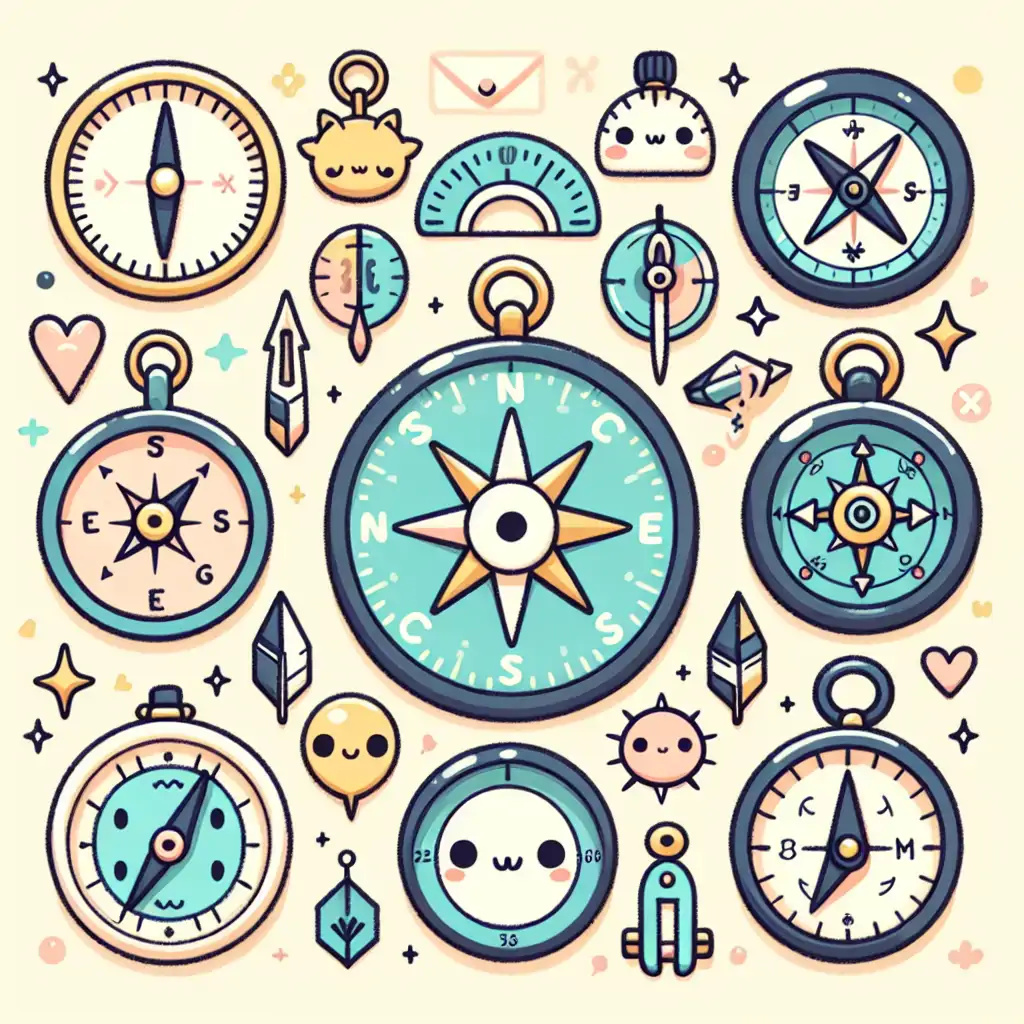
Let’s kick things off with a splash of history: the compass has been around since ancient China, serving as a steadfast guide through endless journeys. It’s quite literally an ancient GPS—only it never runs out of battery and doesn’t cost a small fortune. At its core, the compass is a simple instrument designed to align itself with Earth's magnetic field. But how does it work its charming magic? In the simplest terms, a magnetized needle or disk in the compass lines up with Earth's magnetic poles, always pointing north. This magical self-alignment has baffled many a traveler, often leading to rumors of sorcery.
Before we stray too far into magical territories, let’s get back to the basics. Understanding the difference between true north and magnetic north is fundamental. True north is a fixed point on the globe, while magnetic north is a wandering beast influenced by Earth's swirling molten iron core. This means that magnetic north changes over time, leading us to our next critical concept: declination. Declination is the angle difference between true north and magnetic north at a specific location. Depending on where you are in the world, this can change how you interpret compass readings and charts. Mastering declination means your path won’t divert into oblivion, saving you from a rather embarrassing call to the rescue team.
Understanding declination is crucial for any serious explorer. Let’s put it in context: imagine trying to hit a target with a long-range sniper rifle, but you're a bit off due to wind speeds. Declination is the wind-adjusted aim in navigation—correcting it means striking your target dead on. In some locations, the declination difference might be minimal, but in others, it could be over 20 degrees. So, does your compass point somewhat south when it says north? Understanding declination allows you to adjust the arrow of destiny, ensuring you reach your desired destination instead of a bear's den.
With declination under our belt, let’s jump to inclination, a.k.a. dip. Imagine someone trying furiously to hold a compass in Antarctica, wondering why it's all wobbly. That’s inclination, folks! It refers to the vertical angle of magnetic lines of force. Nearer to the poles, these lines are steeper, possibly affecting compass readings. Knowing about inclination can be particularly handy when you're an Arctic explorer (or an unlucky soul who got dragged there on a Netflix reality show). In milder zones, you may never notice it, but awareness is key when you’re dancing with penguins or polar bears.
Time to lighten the mood with a bit of directional humor: did you hear about the mathematician who loves camping? He’s with the tents you’ll never divide (interpret that as you will). Besides making for jovial dinner jokes, understanding bearing is essential to compass mastery. Bearing is the directional angle from one point to another. Matching this to compass degrees (marked from 0° to 360°) allows you to decide where to head—not in the metaphorical sense of life goals, but literally where your feet should march.
Don’t fret if bearing sounds like geometry class déjà vu. Thankfully, modern compasses come with nifty features like adjustable declination markers and rotating bezels to help make sense of these angles. To find a bearing, all you need to do is align the compass needle with the orienting arrow, spin the bezel to match degree readings, and voila—direction secured! Essentially, it’s like point-and-shoot for explorers. You can now confidently declare, ‘We’re headed northeast’ and watch impressed companions nod approvingly.
Imagery is vital, so let’s dive into what actually goes on inside a compass. Imagine it as a party where the north-seeking needle is the energetic dancer, always pulling north. Align this party-goer with the orienting arrow—an enticing dance floor—by turning the bezel, and you’ve set a bearing. The bezel, the marked degrees circle, lets you choose the direction like a DJ selecting the night’s hits. It's all fun and geometry wrapped in a sleek handheld device that fits snugly into your pocket.
Now, we won't leave you mid-forest without a compass reading hack. If you want to check if you’re truly heading north, remember this rhyme: ‘Red Fred is in the shed.’ Align the red part of the needle (Fred) with the outlined orienting arrow (the shed). This ensures the compass is set to north, so when you rotate the bezel, you’re correctly aligning directions. Think of it as comforting nursery rhymes for grown-ups wandering the wilderness.
By now, you might be thinking: with all this know-how, who needs a GPS? Well, dear reader, we’re now entering techies’ territory. Complementary to compass usage is the power of maps. Even seasoned cartographers can squabble over map readings, so don’t fret if you need a minute to decipher the lines and colors. Remember, you’re Sherlock Holmes, and the map is your enigmatic riddle. Pairing maps with compass readings provides context, ensuring you’re not just replicating a scavenger hunt.
Navigating effectively with a map starts with orienting it. Lay the map on flat ground, and point your compass to magnetic north by following the ‘Red Fred in the shed’ rule. This aligns the map to the proper direction, allowing you to see which landmarks or paths are nearby. Mark your location and destination, and use bearing to find the best path. It’s like piecing together a puzzle without the last piece mysteriously missing from the box.
Have you just realized your compass doesn’t point north? Fret not, it’s likely a magnetic disturbance. Metals, electronics, and even disgruntled porcupines can skew readings, so keep your compass away from such influences. In extreme cases, some areas or weather conditions can throw compasses off, too. If all else fails and you're spinning in circles, make a quaint magnetic sundial while you figure out your next move. Nature finds a way, as they say.
Switching gears, let's talk fancy compasses and what else they offer. There are compasses equipped with clinometers, which measure slopes. Perfect for mountaineers or the curious hilltop hiker. Some models come with luminescent dials for nighttime adventurers. Fashionably vintage or tech-savvy, your compass can do more than just guide—it can adapt to your chosen adventure. Also, don't forget that advanced GPS devices may integrate compass features, but only if the batt saves up.
Let’s address using a compass in various terrains. In dense forests, take advantage of landmarks. When visibility is low or the landscape is monotonous, mark every 100 meters with notable points. In the desert, learn to recognize distant dunes or rock formations, using them in combination with bearings. For mountains, consider elevation changes and slopes, recognizing the challenge of contending with variable declination. Each terrain provides its own hurdles, but with practice, these become part of your thrilling adventure.
An important tip for all explorers is making your own compass for emergencies. A needle rubbed against silk (or your hair, if you’re feeling adventurous) and placed on a leaf floating in water creates a rudimentary compass in the wild. A terrific party trick and a bona fide survival method. These encounters with nature forge stories worth telling, enabling you to face any wilderness with confidence or share tales over a campfire.
Additionally, mental mapping is a useful backup. Making mental notes of surroundings, creating a ‘breadcrumb trail’ in your mind, aids orientation when gadgets fail you entirely. Remember landmarks like unique trees, water bodies, or curious rock formations. However, don't simply rely on memory alone. Practice, practice, and more practice cement this skill as a complement to compass use, so you're well-equipped for those sudden ‘uh-oh’ moments.
Learning to trust your compass is an exciting leap of faith. In the face of doubts, winds, and wandering minds, this simple device can be one of your strongest allies. It’s common to second guess, as the mind tends to suppress its own whispers of doubt. Fight against that hesitation and embrace steady navigation instead, knowing that years of expertise play in your favor. Don't doubt the arrows, or you may end up living a real-life ‘Midsommar’ (minus the cult).
So, we've discussed how to master compass navigation, but what about teaching others? Start with kids or novices by creating fun orienteering games. Draw simple maps, mark destinations, and challenge them to find hidden treasures or snacks. This form of learning fires imaginations rather than dimming them with lectures. Besides, it forms lifelong skills, empowering future adventurers with confident, compass-wielding proficiency.
Trailblazer, you now encompass a library of knowledge, ready to wade through ambiguities of magnetic fields, declination, and terrain adjustments. Remember, a true navigator isn't just one who knows their compass but also one who transcends the fear of wilderness, turning each step into a confident stride. Your narrative doesn't only involve reaching goals but taking part in meaningful, exciting encounters. A compass in hand solidifies your status as a modern explorer, harking to legendary adventurers.
Finally, let's bust some myths while we're at it: No, a compass won't reveal Atlantis or point to treasure (unless you’re part of a very elaborate prank). It's a reliable guide for practical navigation. And good news! Magnetic impulses won’t give you superpowers, but they won’t fry your fingers either. What you have at your disposal is a tool, ordinary in form but extraordinary in function. Just remember, even seasoned travelers slip up, so don’t be hard on yourself if you sometimes zigzag instead of cutting a clean path.
Choosing a compass wisely matters, as good tools make for better explorers. Depending on your needs and budget, opt for features that suit your journey style—be it a lensatic, orienteering, or digital compass. Take time to familiarize yourself with its quirks and features to enhance outdoor experiences. Seek recommendations, test them on mini-adventures, and make informed choices. Compass shopping can be bewildering altogether but forearmed with this knowledge, you’re sure to make a stellar pick.
Alongside its technical prowess, a compass holds symbols of philosophy and freedom. Being an outdoor enthusiast encompasses patience, planning, and basking in the isolated beauty of nature. Even when everything feels convoluted, the compass simplifies with clarity. Whether you’re aiming to conquer summits or simply find peace in silence, this navigation companion whispers, ‘You've got this,’ guiding paths unknown and yet exciting.
Remembering this, your toolkit now holds wisdom—enough to inspire new outdoor adventures. Unchartered territories, captivating landscapes, or even a cozy local park awaits. While technology is phenomenal, relying solely on it isn't necessary due to the human ingenuity evident even in such a modest instrument. Connect, reconnect, and keep rediscovering. Taking control of direction is one aspect; navigating life parallels, learning to trust intuition fortified by compass knowledge.
Armed with everything more than direction, mock-ups of labyrinths, stories unraveled, each exploration conjures humanity's practical spirit in the wild. Revelations abound in every compass use—a sense of poetry unfolds with geography. It becomes more than accuracy; it transforms into effortless presence. Becoming a compass master means engaging in new realms marked by learning, curiosity, and the promise of uncharted journeys.
As wisdom suggests: ‘Not all those who wander are lost.’ By divine design, wandering requires alignment, not just in movement but thought. A compass, simple and silent, encapsulates the adventurous spirit, finding a space between direction and joy. For the compass isn't solely a guide—it's a herald of endless possibilities. Through distorted maps, tangled vines, and luminous twilight, each turn, twist, and angle become imprints on memories forged in harmony with Earth.
Riveting as experiences grow into cherished moments, realizations of achieving navigation proficiency materialize. In comprehensive steps, exploring flourishes alongside compass practice, demystified into user-friendly, humorous readability. Amid new terrain or perplexed paths, the compass has your back with stalwart holiness. Adventure awaits beyond mapped parameters, where imagination extends boundaries far as discovery goes. Forge your way through the wild; the winds of adventure await you, compass in hand.
To encapsulate, compass mastery brings newfound confidence, transforming something seemingly mundane into an exhilarating companionship with nature. With practice, mistakes morph into joyful learning opportunities, building legends of success hilariously narrated with friends or on a charismatic blog like ours. The compass exemplifies transformation and understanding, guiding outdoor adventurers from perceiving themselves as lost to veritably found. Keep exploring as grounds widen beneath each stride.
To top it off, illustrating compass use alongside hilarious anecdotes reaffirms how life is juxtaposed with navigation. Ridiculous mixups and lucky recoveries often forge tales that retain absurd hilarity suited for any gathering. Adventure is supposed to be fun, thrilling, and meaningful. Your sense of humor combined with expertise instills confidence within others—hey, even if fleeting directions misplaced you, there's always laughter in unforgettable stories.
Navigating nature is more than science; it encapsulates timeless enjoyment tied with outdoor enthusiasts' zeal. The great outdoors awaits you—a region plastered in untold beauty awaiting discovery under compass guidance. Shake the cobwebs off those maps, dust your compass, and with learned buoyancy embark on journeys devoid of hesitation, teeming with thrill. Cheers to unforgettable adventures restored by compass mastery!
As modern voyagers, our compass is more than a relic—it's a testament to humanity's relationship with exploration. It’s more than a slice of metal or digital coordinates; it intertwines practicality, philosophy, humor, and companionship painted onto life’s canvas. When embraced heartily, every mile brims with adventures defined through wondrous seeking, courtesy of your trusty magnetic boulevard, a metaphor in compass form.
As we draw the curtain on this compass odyssey, you're now equipped with the skills and humor to tackle any wilderness—whether it’s the real great outdoors or your local park outing. You've navigated the minefields of magnetic north, mastered declination and inclination, and can now crack bearing jokes with the best of them. This knowledge doesn’t just point you in the right direction; it opens a world of possibilities and stories you'll share with fellow wanderers.
Compass mastery transforms something seemingly arcane into an engaging ally. It bridges gaps between technology and tradition, science and stories, guiding explorers through every path with unwavering resolve and a dash of charm. By embracing these tools and their teachings, you enrich your adventures with understanding and wit, crafting narratives even the campfire moths would want to hear. You’ve acquired more than skills; you’ve adopted a new compass-centered perspective.
Unleash the adventurer within as you stride forth, compass humming with unstoppable energy. Embrace every trail, hill, and horizon with fearless determination. Remember, the compass is more than a tool—it’s the manifestation of curiosity, discovery, and the enduring spirit of exploration. The journey awaits! Chart its course with delight, reveling in each found direction, because the unknown has truly become yours to explore, with both confidence and humor. Onward, noble adventurer!
Thanks for taking the time to read my article! You may also find this one interesting.
Gourmet on the Go: Elevate Your Campfire Cooking GameTil next time! Katie

Katie
Katie is a wildlife guru by day and a passionate part-time blog writer. With her deep expertise in nature and a gift for vivid storytelling, she crafts compelling articles that bring the wonders of the wild to life, captivating readers with her knowledge and love for the natural world.
A proud member of the B-Team
If you're curious to dive deeper into related topics, then you may find these external links useful.
1. History of the Compass
An informative resource detailing the history and development of the compass, providing context on its ancient origins and evolution as a navigation tool.
https://en.wikipedia.org/wiki/History_of_the_compass2. Understanding Magnetic Declination
A comprehensive guide on magnetic declination, explaining its importance in navigation and how it affects compass readings.
https://modern-physics.org/magnetic-declination/3. Guide to Using a Compass
A practical guide that offers step-by-step instructions on how to properly use a compass for navigation, including techniques for finding bearings.
https://getoutside.ordnancesurvey.co.uk/guides/beginners-guide-to-using-a-compass/4. DIY Emergency Compass
A tutorial on creating a basic compass using household items, an essential skill for survival situations when a traditional compass is unavailable.
https://northshorecrafts.com/how-to-make-a-compass-with-a-needle/5. Orienteering for Beginners
An introductory resource on orienteering, a sport that combines running with navigation using a map and compass, with tips for beginners.
https://betterorienteering.org/beginner/©2023 - 2026 SP Software Solutions Ltd. All rights reserved.